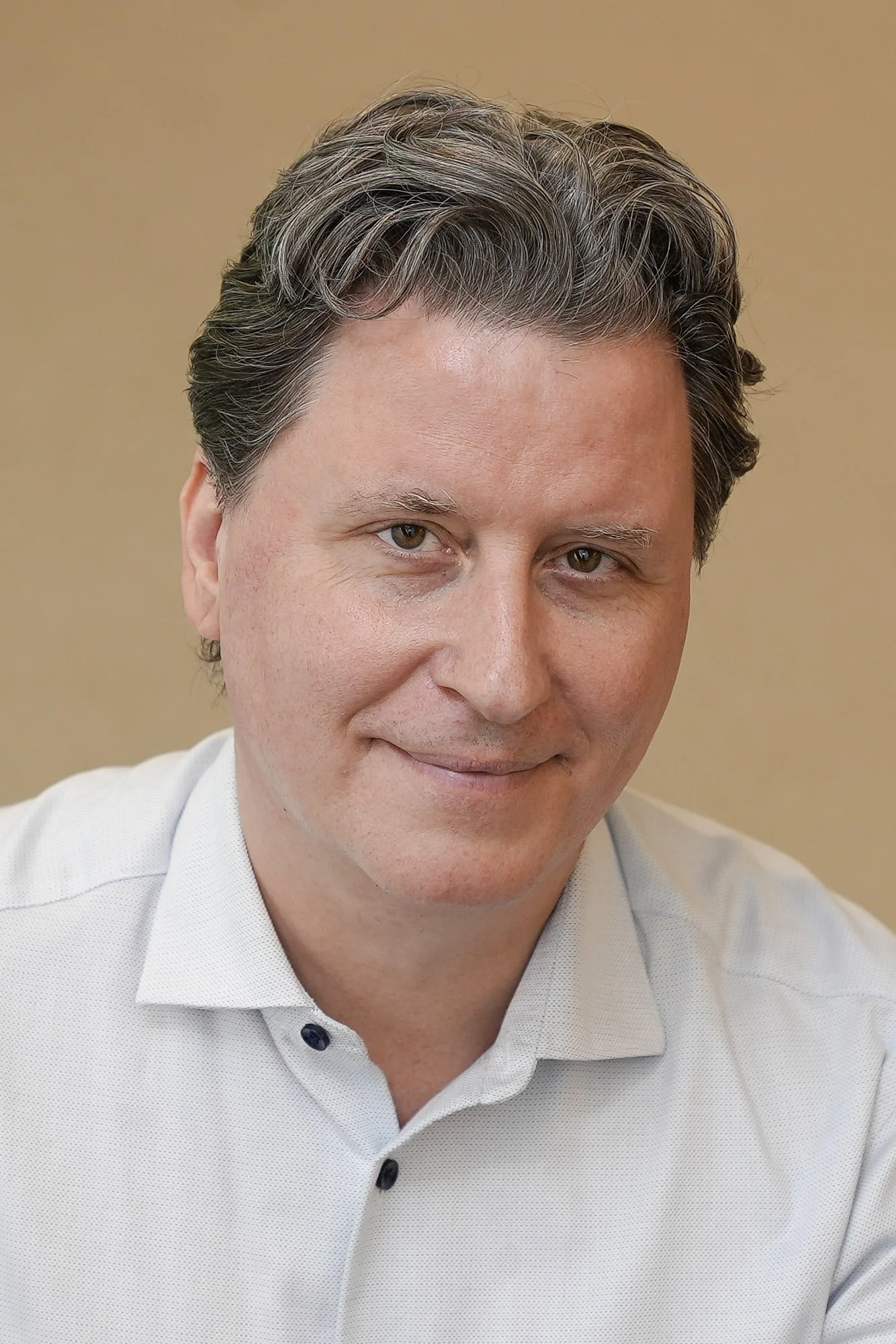
Andrew Gibbons
Your guide to coordination you can trust.
In over 25 years of private practice, I’ve seen everything from a 3-year old girl who was born without a fibula learning to walk, to a cancer researcher whose neck was contorted from looking through microscopes, to a concert violinist who struggled to breathe through the Beethoven concerto.
I help people solve these kinds of problems.
My expertise lives in the difference between how you intend to move and how you actually move. We discover what has been lacking and what kinds of compensations filled the gap. We sort out your coordination so you can return to your life with your resources intact.
My clients have games to win, children to raise, diseases to cure and concertos to play. The next footstep, lab project or arpeggio moves them forward.
A Session
A session begins with conversation. You describe what hurts or what has become difficult. I watch how you walk, how you take your coat off, how you sit, how you turn your head. Everyday movements often reveal more than the complaint does. I might ask you to bend your head to one side and the other, and point out where your ribs and spine participate better in one direction but not the other.
Then you lie on the table, supported by bolsters, pads, and pillows — more comfortably, most clients find, than they lie in their own beds. The background tension softens as you become more sensitive to small differences. Hands-on work follows: touch, movement, and ways of listening that clarify what moves easily and what doesn't.
A pianist came to me with neck and shoulder pain. Watching him play in the first session, his pelvis was locked in place on the bench. It was as if he sat in a bucket, his spine inert and hunched providing his head and arms no support, his hands cramped and flailing. I had him close the lid of the piano, fold his forearms on the lid and rest his head on his hands. We began to move his pelvis and spine with his arms fixed. It was hard at first. He couldn’t see how this would help his shoulders. He had spent years holding his trunk still so he could focus on playing with just his arms and hands. We reversed the constraint, and the large muscles of his back and pelvis finally started to coordinate his trunk. This was the first of many sessions and many revelations about “the instrument that plays the instrument.” In the end, he not only played better than before the injury, he understood why.
Background
I am a classically trained pianist with a Bachelor's degree from Columbia University and a Master's degree from Manhattan School of Music. My Feldenkrais Method® certification combined the biomechanics of human movement with the study of perception, learning, and refinement.
In the 1990s I consulted on The New York Times's employee ergonomic and movement retraining program. In 2008 I gave a tech talk, "Avoiding the Black Hole of Computer Posture," at Google's New York headquarters. In 2021 I wrote the chapter "Working with Musicians" for The Feldenkrais Method: Learning Through Movement (Handspring Publishing). I have also taught programs for the Hospital for Special Surgery, SUNY Stony Brook's Doctoral Physical Therapy program, the Manhattan School of Music, and the NYC Department for the Aging.
Each summer since 2008, I have taught for the Marlboro Music Festival, where I give private and group lessons to classical musicians from around the world who have gathered to perform the great works of chamber music.